Epcot’s Flower & Garden Festival is already one of the most visually overwhelming places you can point a camera. So naturally I thought: what if I made it weirder? That’s how I ended up walking the park with a roll of Lomography LomoChrome Purple loaded into my Canon AE-1 Program — and it was one of the best decisions I’ve made as a film photographer.
I’d been curious about LomoChrome Purple for a while. The promise of foliage going purple, blues shifting toward teal, and warm tones cooling down is either completely appealing or completely off-putting depending on your sensibilities. For me it was immediately appealing and Epcot’s festival, with its hundreds of flower displays and manicured gardens, felt like the perfect testing ground. My favorite subject is flowers so I knew this would be the perfect experimental film to try.
What Is LomoChrome Purple?
LomoChrome Purple is a color negative film made by Lomography, available in 35mm and 120 formats. It’s designed to mimic the look of discontinued infrared-style films — the kind that render green foliage as purple or magenta, push blue skies toward teal or olive, and shift warm skin tones cooler.
Crucially, it isn’t true infrared film. The color shift is baked into the emulsion chemistry itself, which means no special filters, no unusual handling. It’s a standard C-41 color negative — just a very unusual looking one. Load it, meter it, shoot it.
Quick Specs
- Format35mm & 120
- ISO100–400 (box speed ~200)
- ProcessC-41 (standard color)
- Exposures36 (35mm) / 12 (120)
- EffectColor-shifted / pseudo-infrared
- Camera usedCanon AE-1 Program
Why the Canon AE-1 Program?
The AE-1 Program is my go-to camera for days when I want to shoot a lot and think a little less. In Program mode it handles both aperture and shutter speed automatically, which freed me up to concentrate entirely on framing and moving through the park. Walking Epcot all day is tiring enough — having the camera make the exposure calls meant I could focus on finding compositions.
That said, I did dial in some exposure compensation when shooting into brighter backgrounds. LomoChrome Purple responds well to slight overexposure — it opens up the shadows and makes the color shift richer — so I pushed it half a stop when the scene called for it.
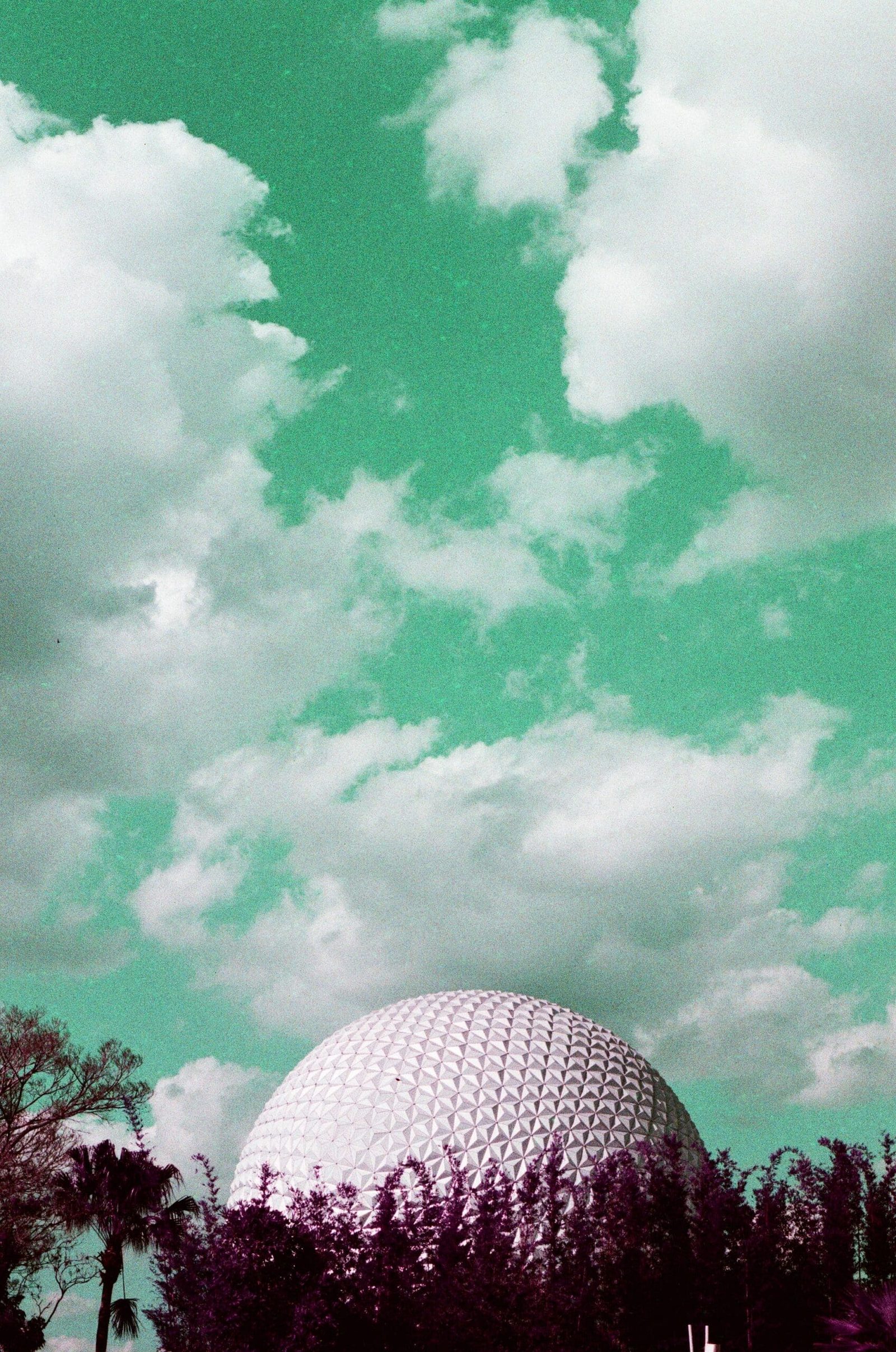

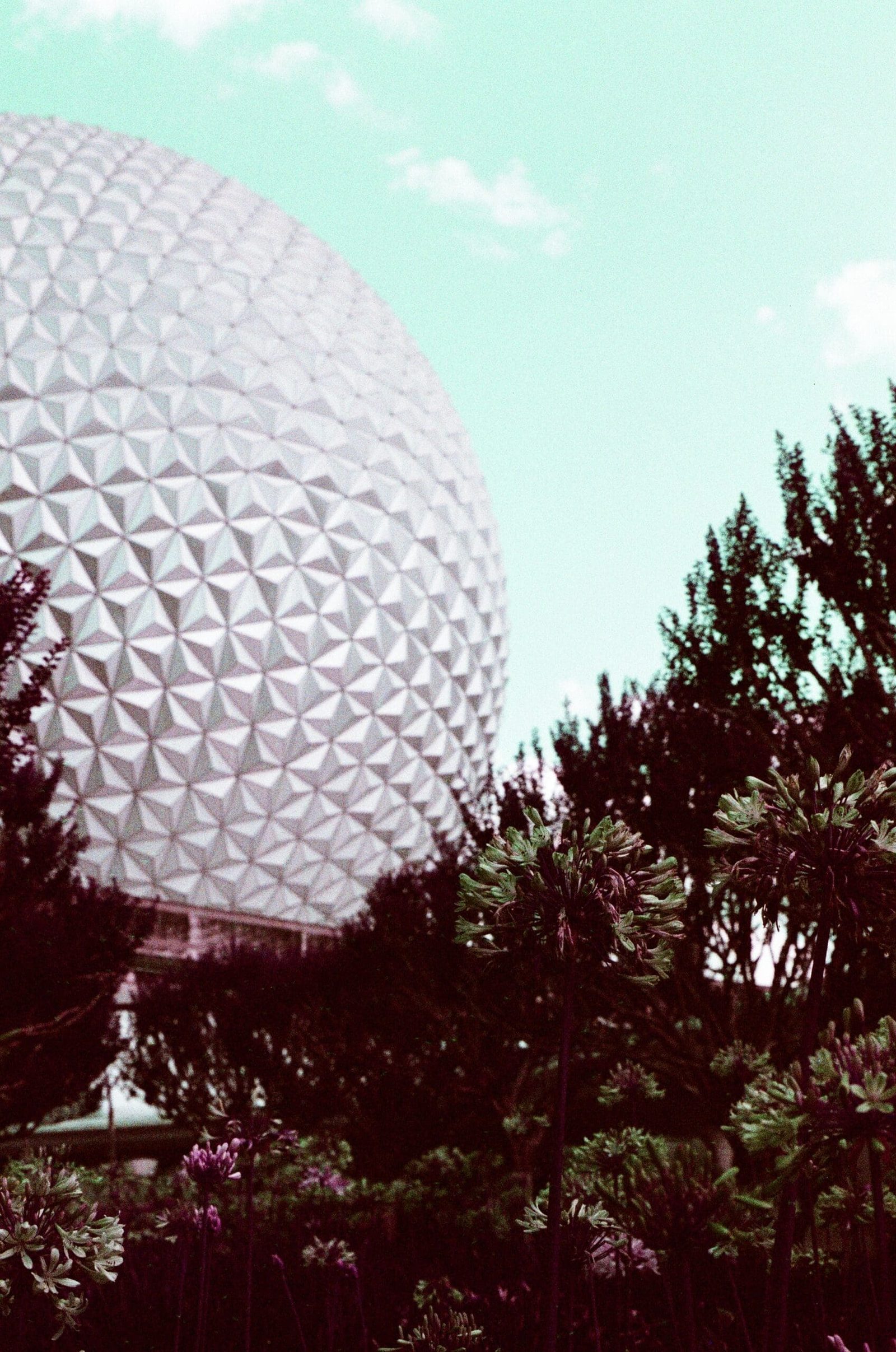
Spaceship Earth against a LomoChrome-teal sky. Left: wide with purple palm trees. Right: up close with the geometric panels. The cool shift on the concrete panels gives the structure an almost alien quality.
Shooting Flowers at Epcot: What I Found
The Flower & Garden Festival runs every spring and fills Epcot with elaborate garden beds, topiaries, and floral installations across the whole park. For a film photographer it’s almost too much — every corner has something worth shooting. LomoChrome Purple made it even more so.
The flower beds and close-ups
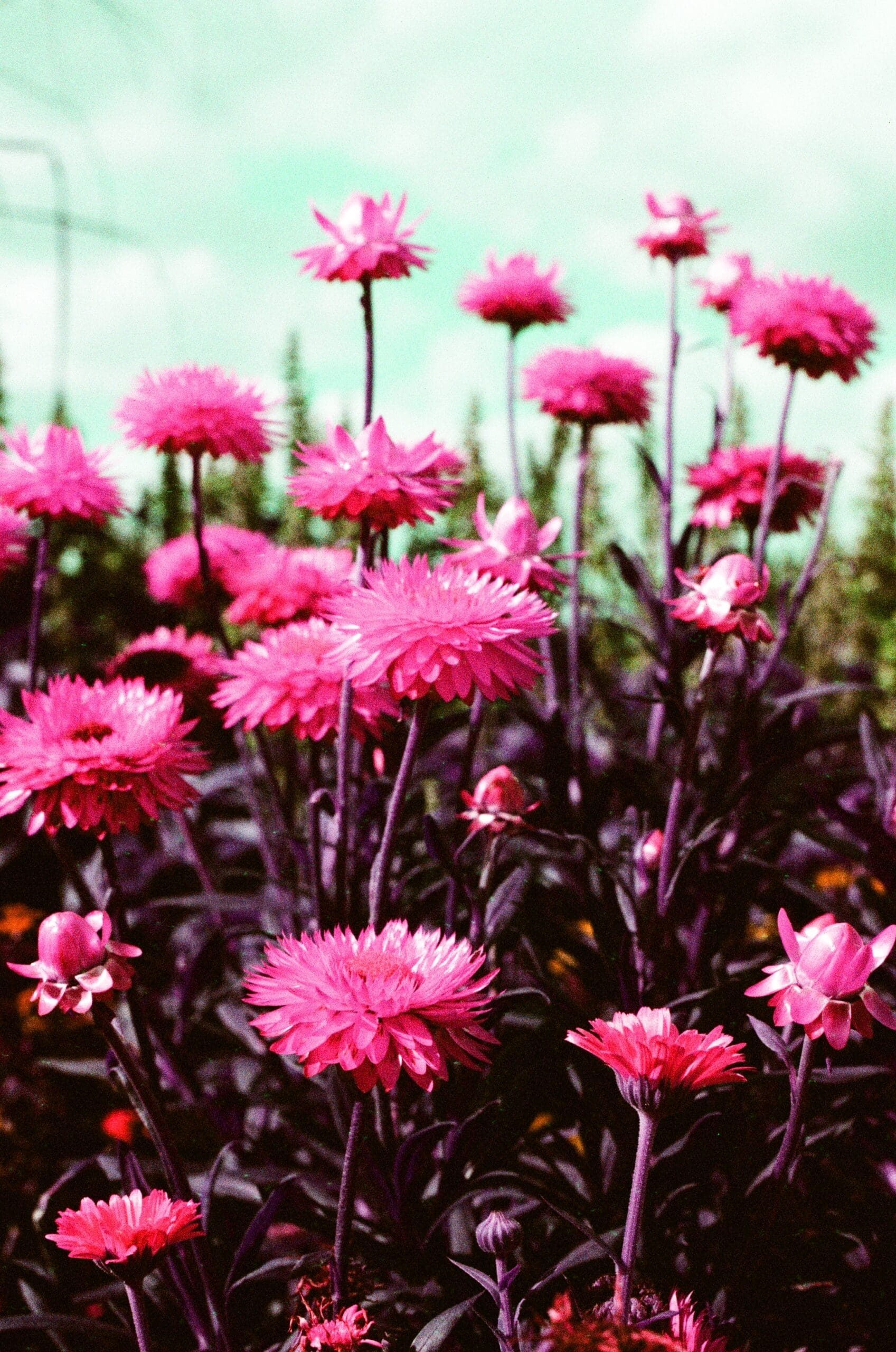
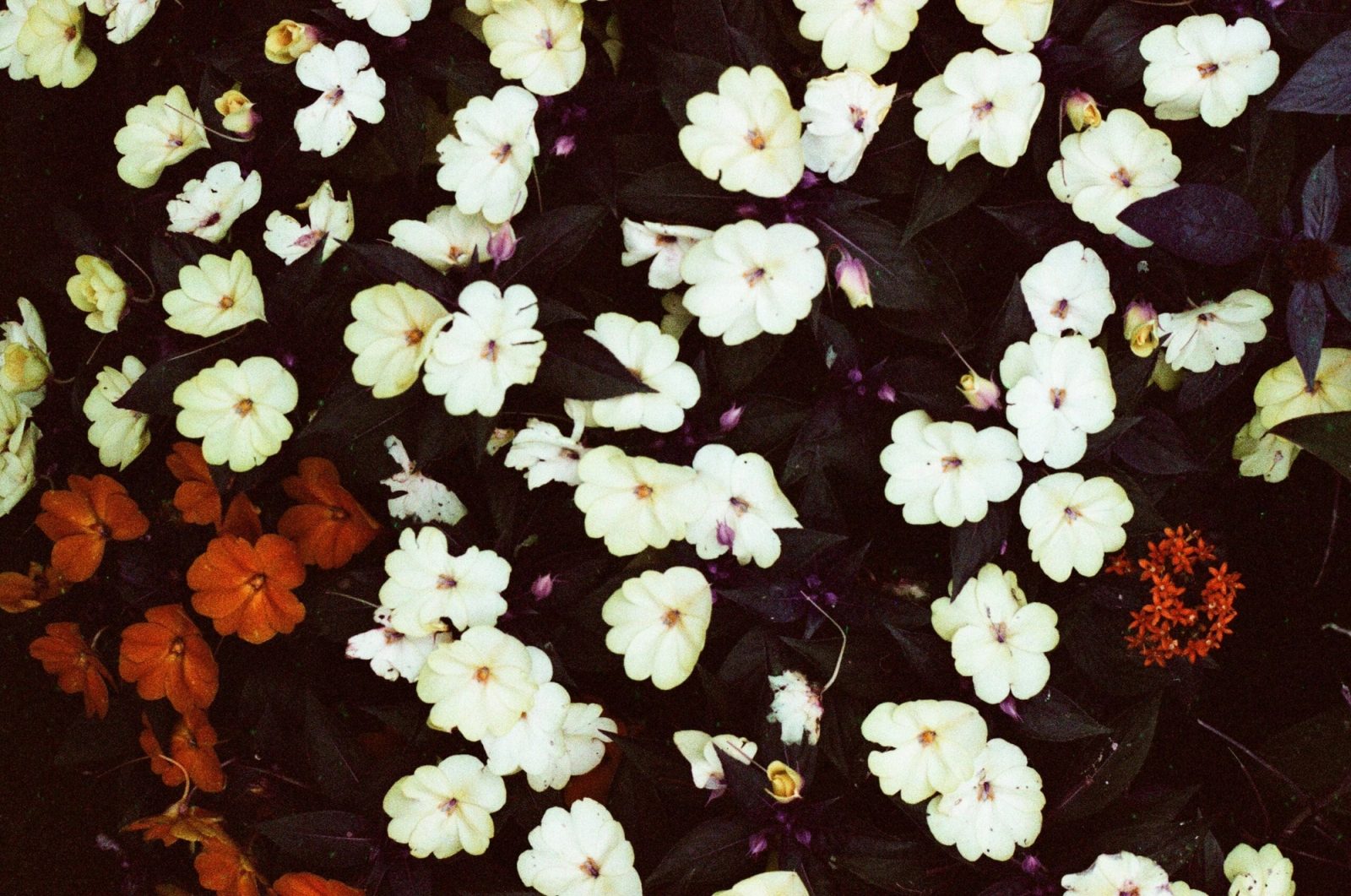
This is where the film earns its reputation. Orange zinnias stayed warm and vivid while the foliage around them turned a deep, bruised purple — the contrast is startling in the best way. Flowers that were already pink or magenta in real life became almost luminous. White blooms took on a faint cream-gold cast with near-black leaves around them.
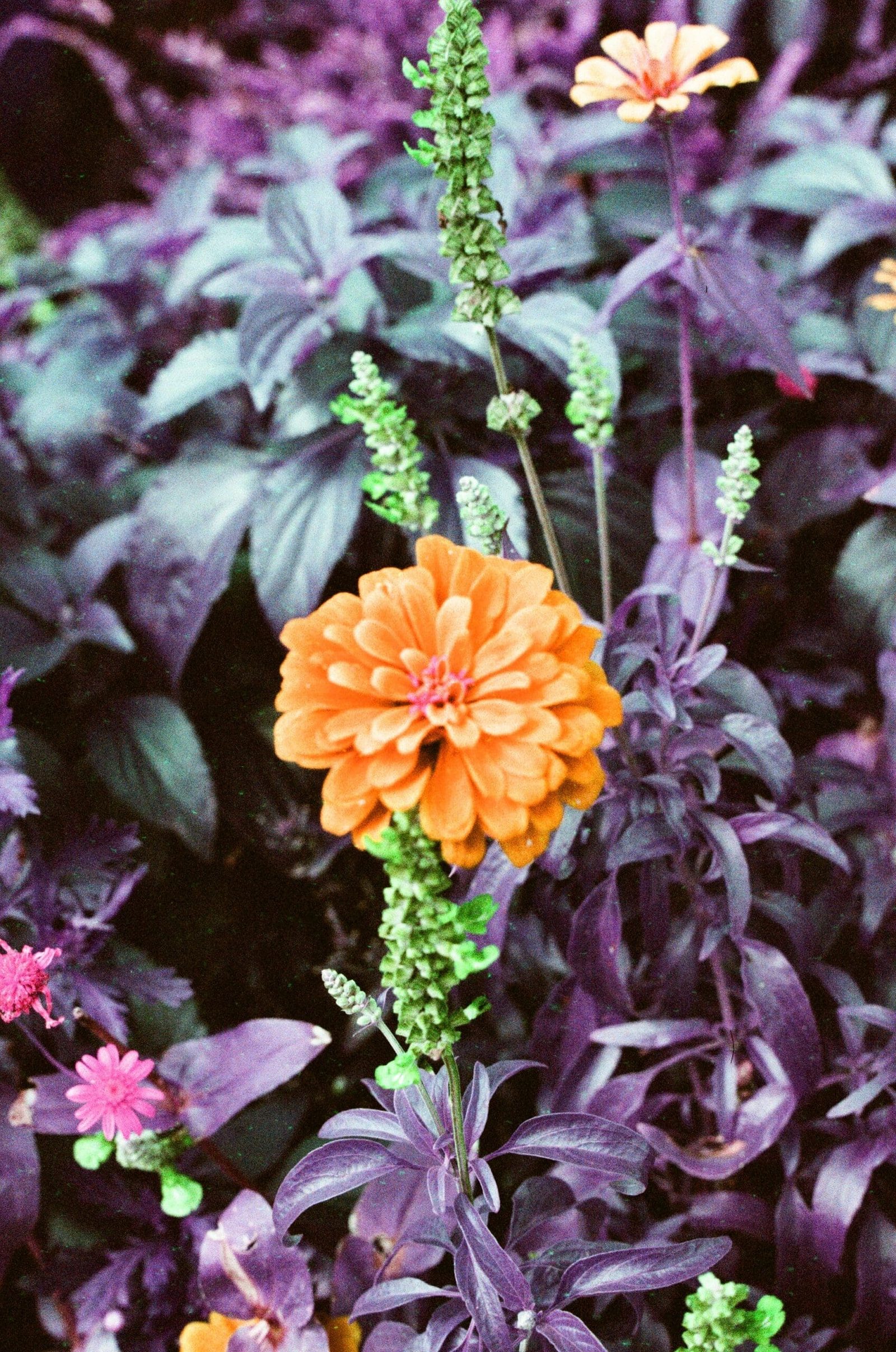
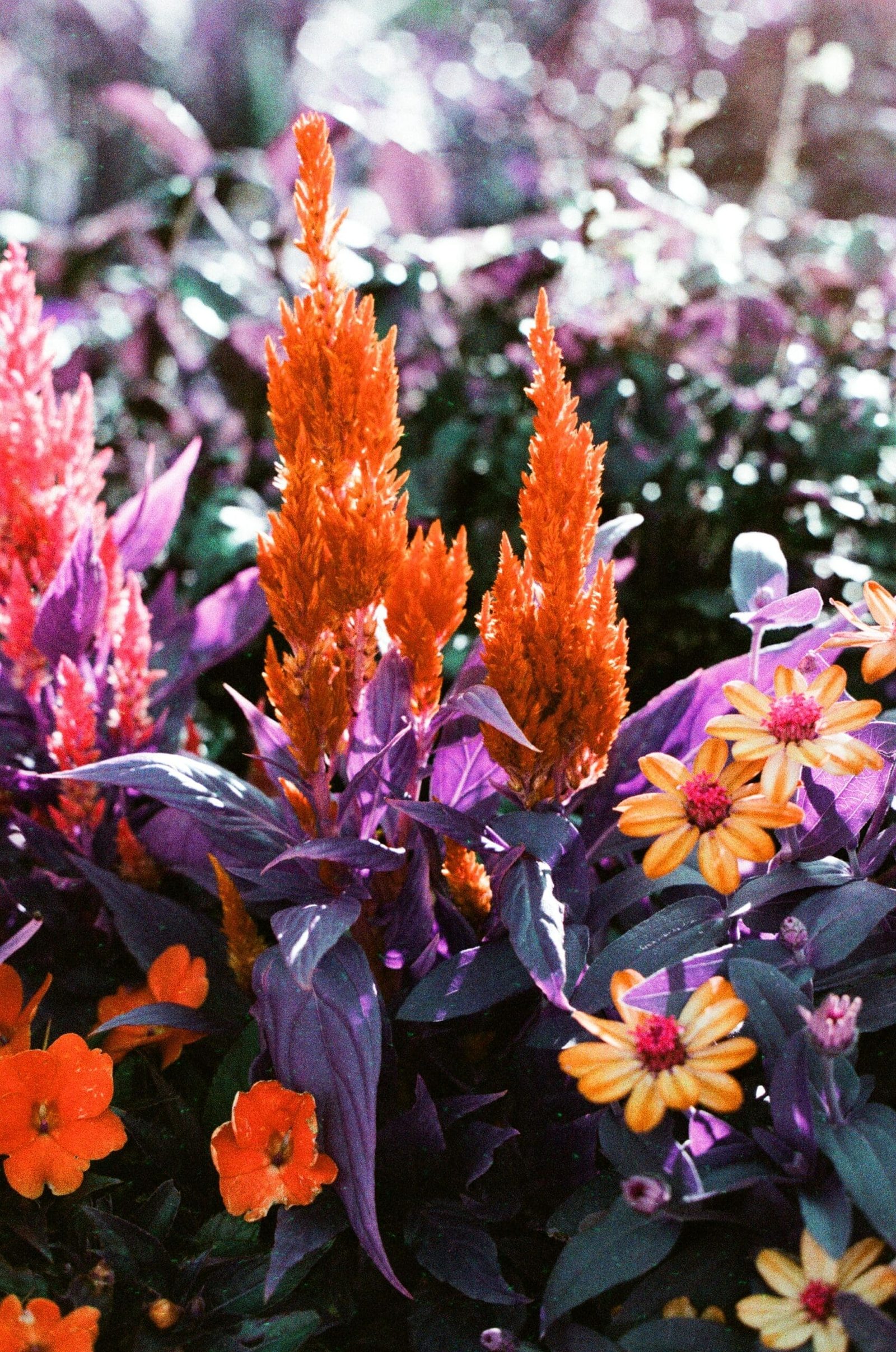
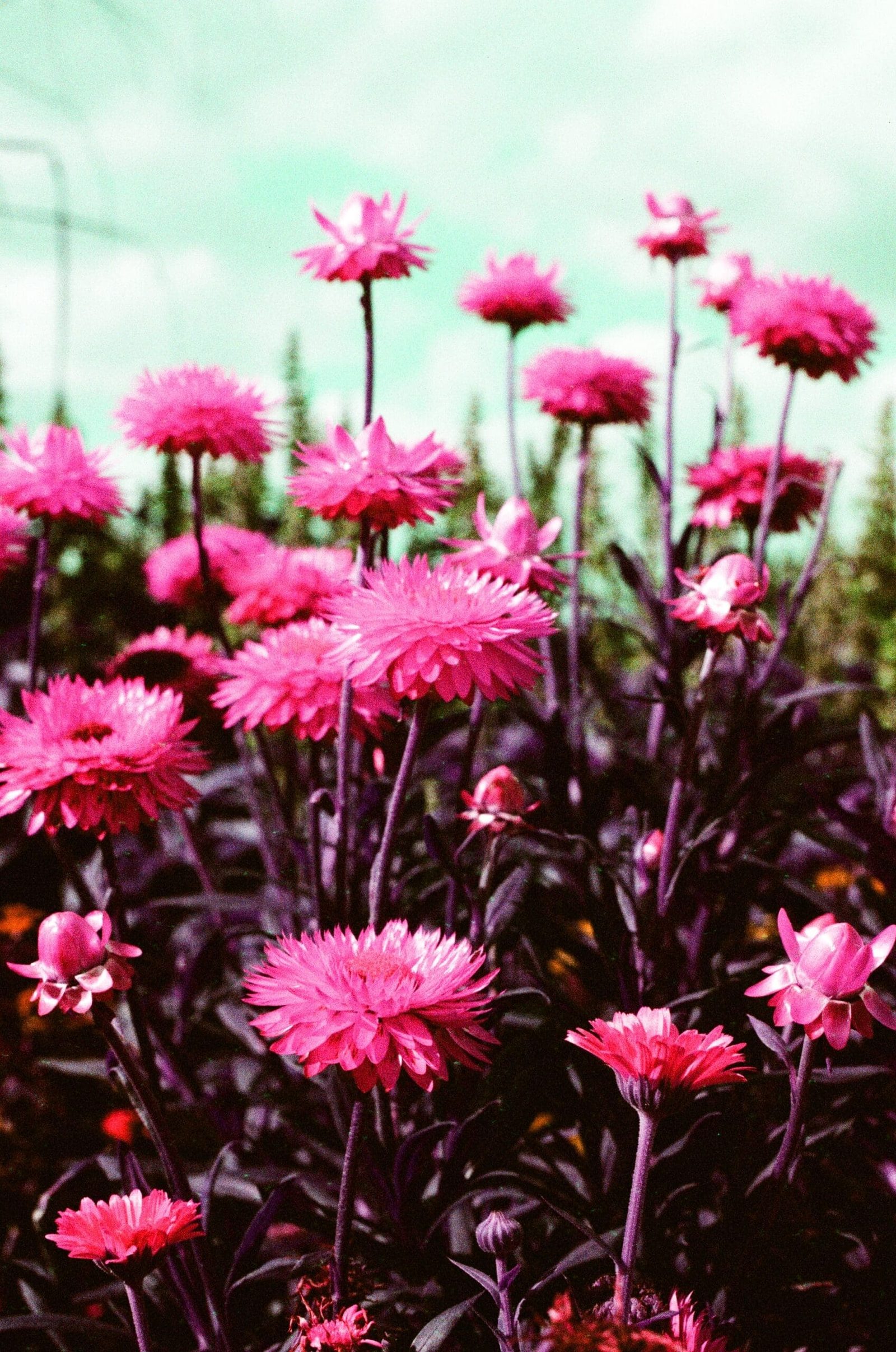
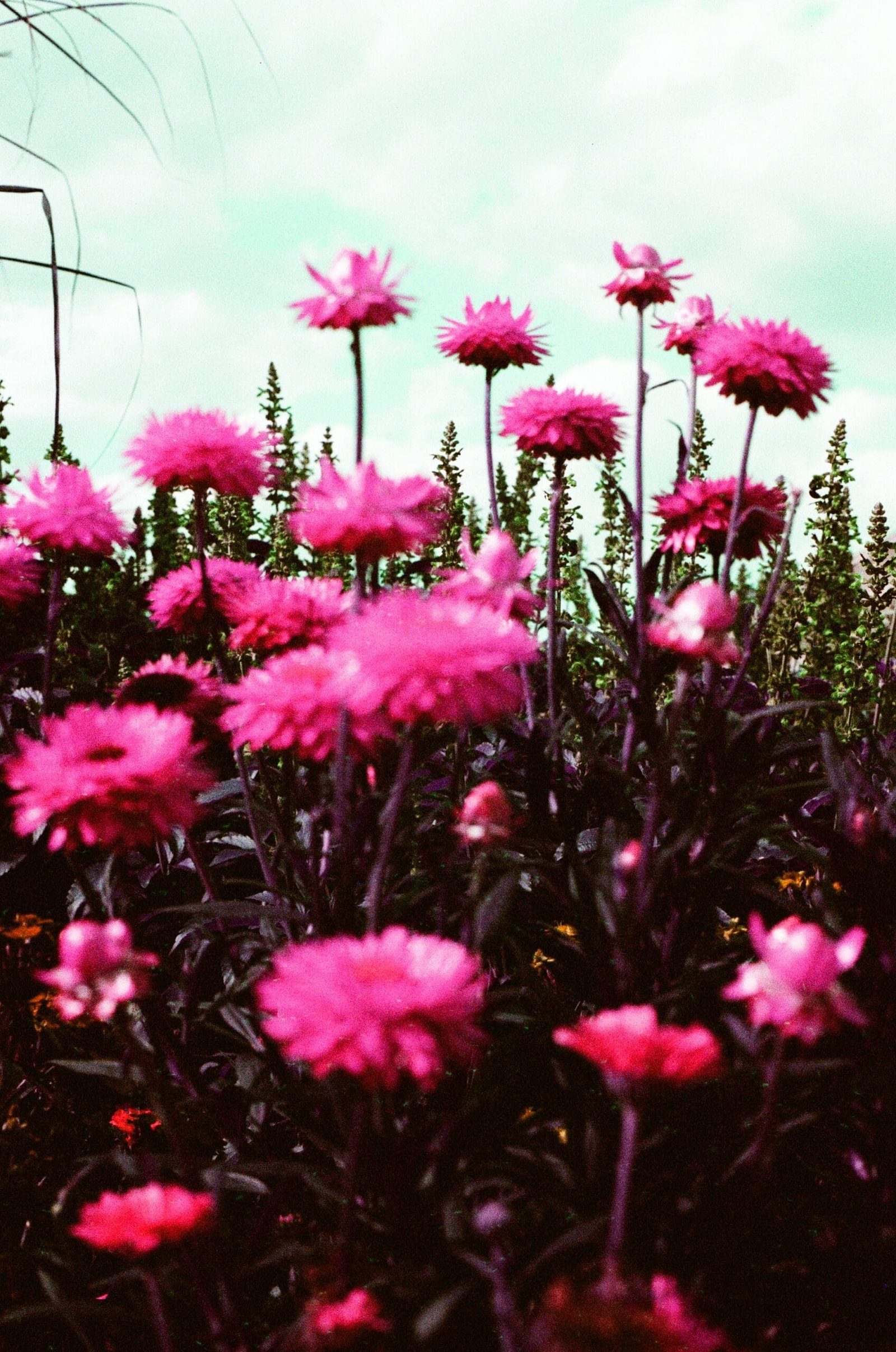
The beds of pink gerbera daisies were a gift for this film. Vivid blooms, purple stems and leaves, and that signature teal sky above.
The garden paths and atmosphere
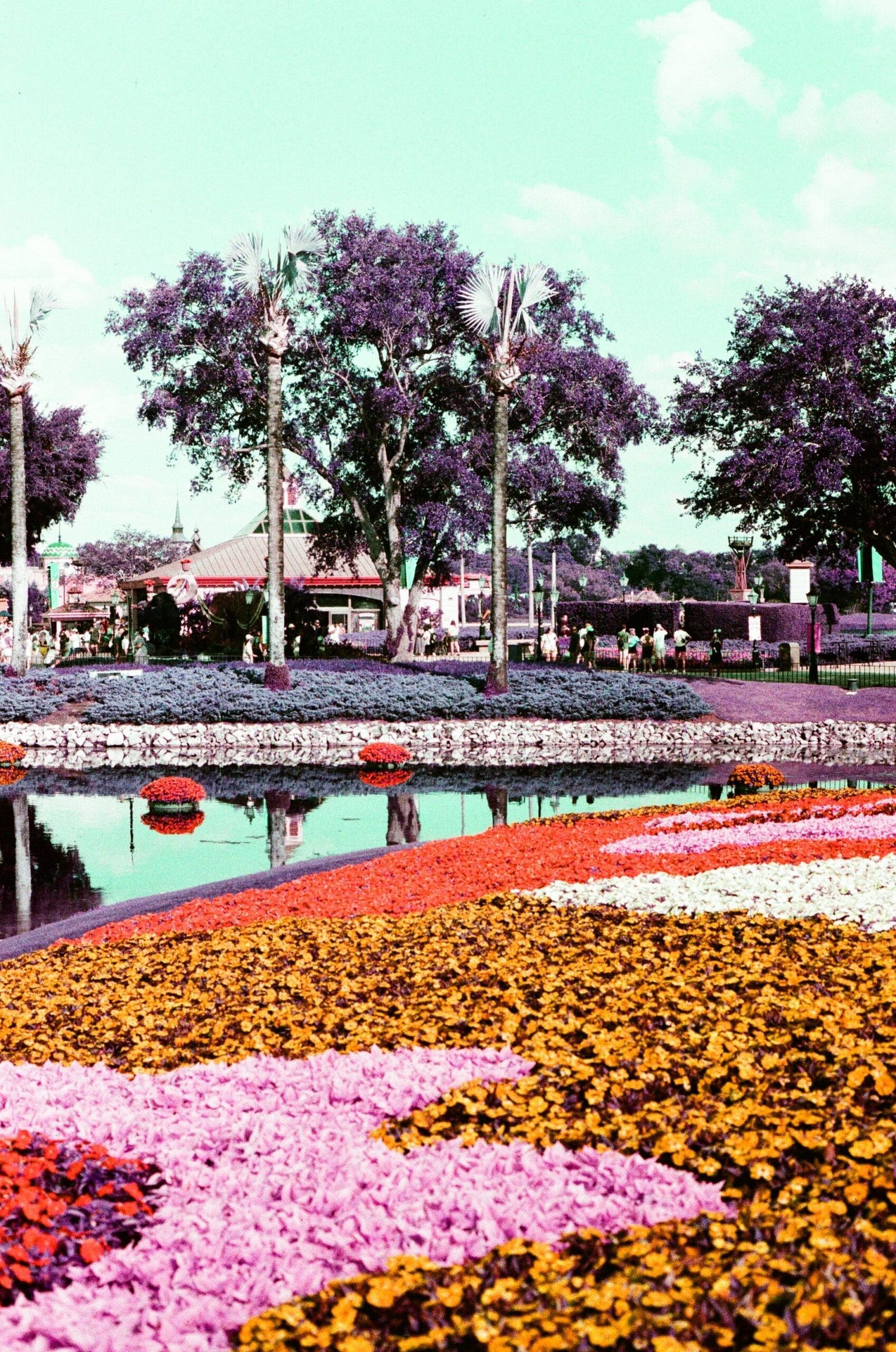
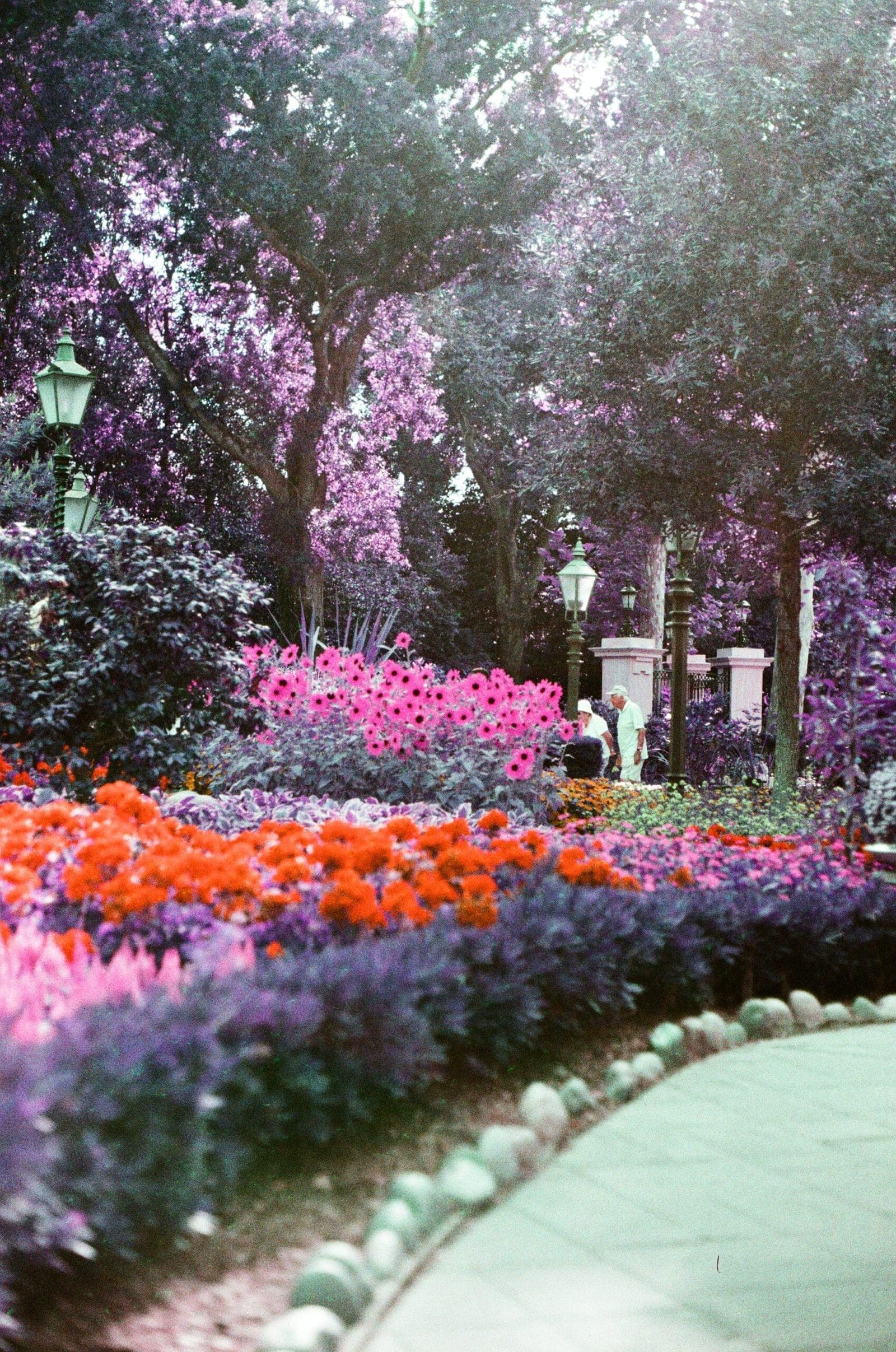
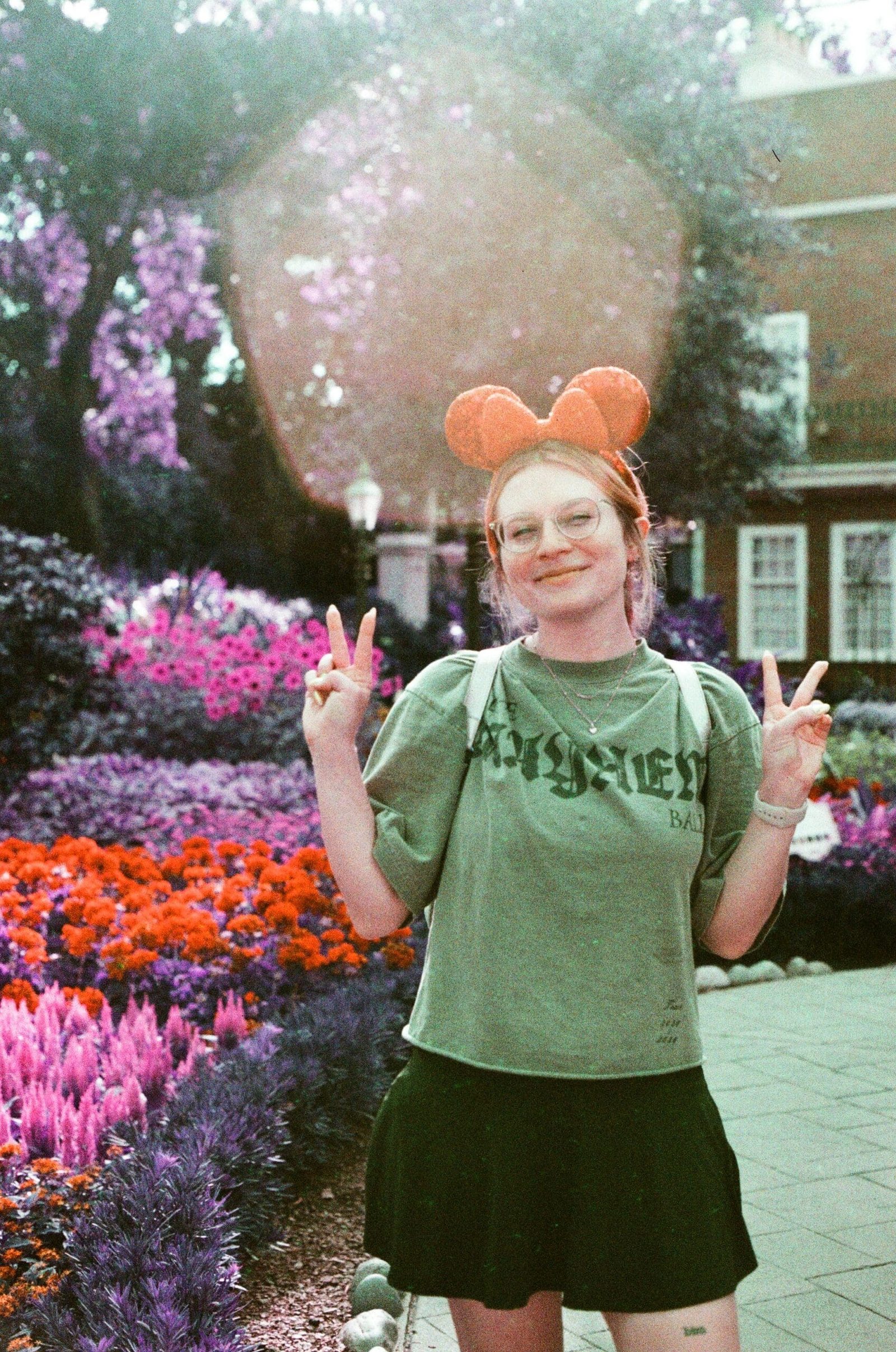
One of my favourite results from the roll was a wider shot of one of the World Showcase garden paths — trees completely transformed to purple overhead, layers of orange and pink and red flowers below, and two guests walking through it all completely unaware of how surreal the scene looks on film.
The monorail
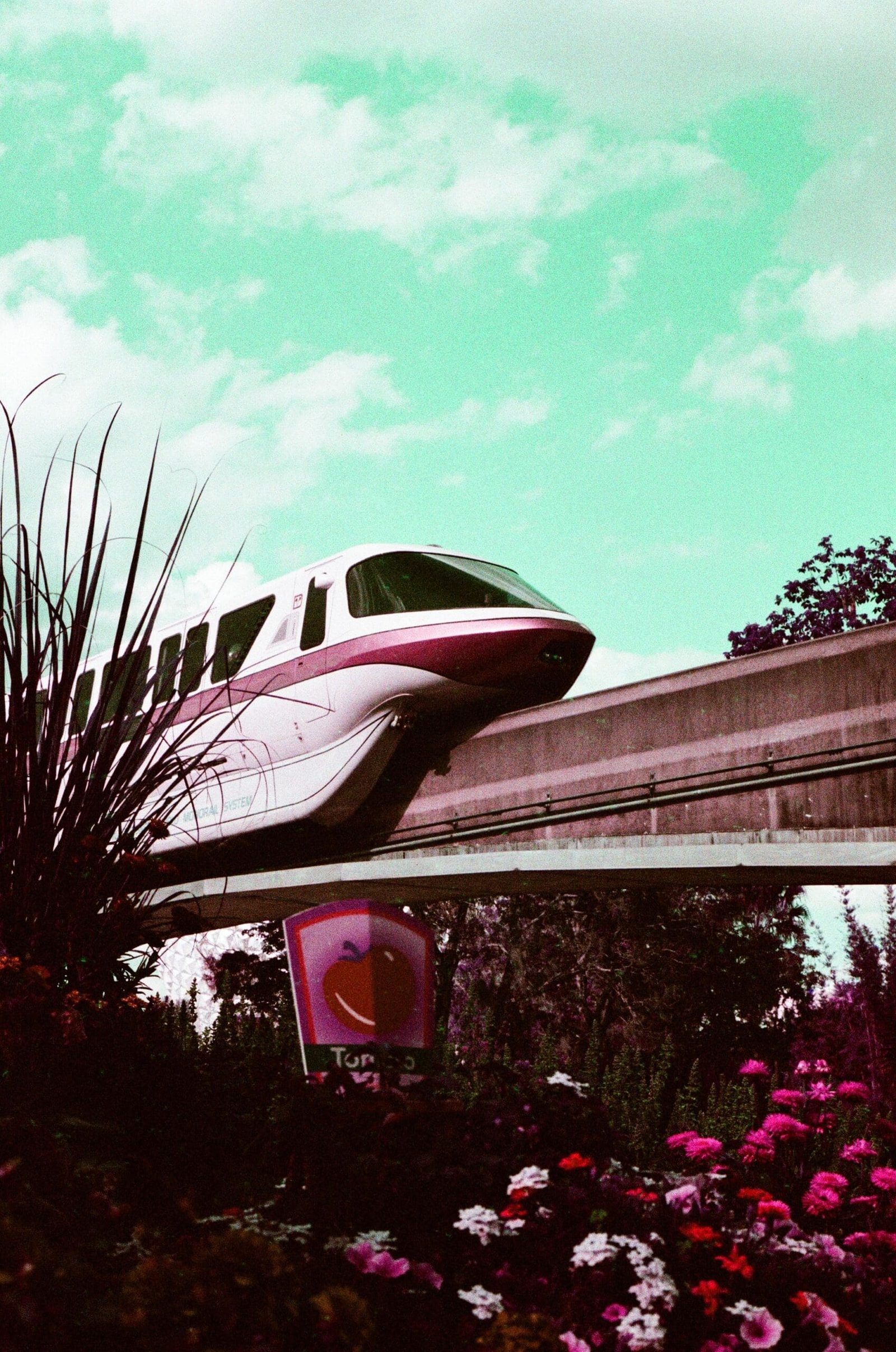
I didn’t set out to photograph the monorail, but when it glided past the festival flowers with that teal sky behind it I had no choice. The LomoChrome color shift turns the white monorail slightly pink-lilac, and the teal-green sky makes the whole thing look like a postcard from a retro-future that never happened.
The butterfly house
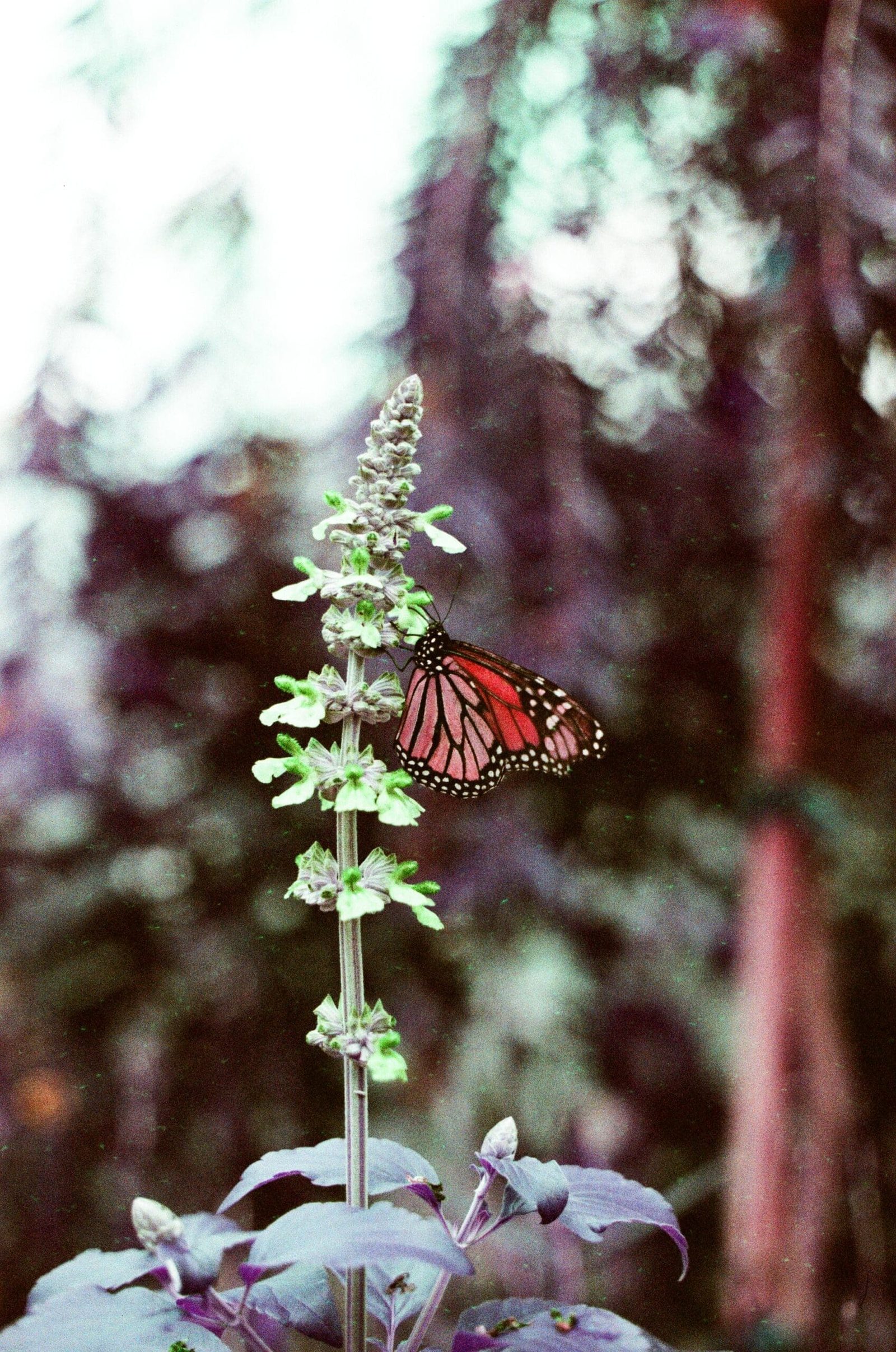
The festival’s butterfly garden was a challenge to shoot — fast-moving subjects, dappled light — but occasionally one would settle long enough to get the shot. This monarch on a basil plant is probably my favourite frame from the whole roll. The purple-shifted bokeh background with the bright red wings somehow feels like a painting.
Tips for Shooting LomoChrome Purple
Shoot at box speed (ISO 200) to start. Some photographers rate it at 100 for richer shadow detail, but box speed gives you consistent results while you learn the stock. On a bright day at Epcot, 200 gave me plenty of room.
Overexpose slightly when you can. Half a stop to a full stop over opens up shadows and intensifies the color shift in highlights. The AE-1 Program’s exposure compensation dial made this easy to dial in on the fly.
Lean into subjects with lots of green. Foliage is where the film earns its name. Gardens, parks, and anywhere with dense plant life will give you the most dramatic results.
It’s standard C-41 — any lab can process it. No special handling required. Drop it off wherever you normally send your color film.
Tell your lab not to color-correct. When scanning, ask for “no correction” or “scan as-is.” The shifted tones are the point — correcting for them defeats the whole purpose.
Final Thoughts
Epcot’s Flower & Garden Festival and LomoChrome Purple were, it turns out, made for each other. The sheer density of color and organic shapes at the festival gives the film exactly what it needs to do something genuinely strange and beautiful. I came home with a roll full of images that look like no other place I’ve photographed — even though I’ve visited Epcot dozens of times.
The Canon AE-1 Program was the right camera for the day: reliable, light enough for a long park walk, and easy to use reactively when something like a butterfly lands right in front of you. If you’re planning a trip to the festival and you shoot film, I cannot recommend this combination enough.
If you’ve been on the fence about LomoChrome Purple, consider this your sign. Load a roll and find the nearest garden.